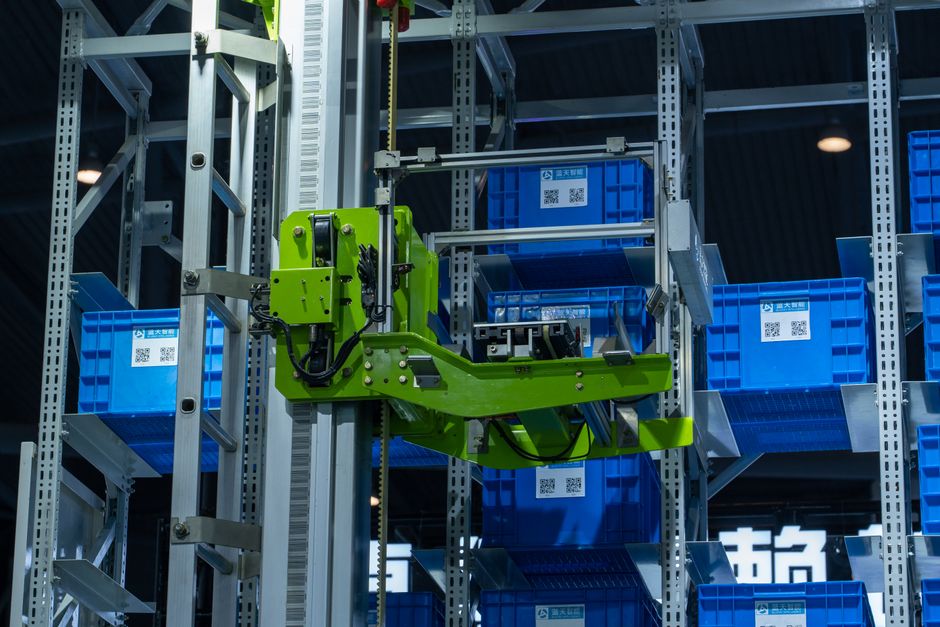
Have you ever wondered how that new gadget you ordered online arrives at your doorstep so quickly? Or how a massive e-commerce company manages to sort millions of packages every day? The secret often lies not with an army of human workers alone, but with a silent, tireless force working behind the scenes: warehouse and logistics robots! These incredible machines are transforming the way goods are stored, moved, and delivered, making our modern world of instant gratification possible. Let's dive into the fascinating realm of automation that powers our supply chains.
The Rise of Robotics in Logistics
The global e-commerce boom has created an unprecedented demand for speed and efficiency in the logistics industry. Traditional warehouses, relying heavily on manual labor, often struggle to keep up with the sheer volume and complexity of orders. This is where robotics steps in. From massive fulfillment centers like Amazon's to smaller local distribution hubs, robots are becoming indispensable.
Think about it: a human worker might walk miles in a day picking items, but a robot can zip around much faster, operate 24/7 without breaks, and make fewer mistakes. This shift isn't just about replacing jobs; it's about creating a more optimized, safer, and ultimately more productive environment. It's about combining human ingenuity with robotic precision to achieve new levels of operational excellence.
Types of Warehouse Robots
The world of logistics robots is diverse, with each type designed for specific tasks. Here are some of the most common and impactful ones:
Automated Guided Vehicles (AGVs)
- What they are: AGVs are essentially robotic carts that follow predetermined paths, often marked by magnetic strips, wires embedded in the floor, or optical sensors following painted lines.
- How they work: They are programmed to move between specific points, picking up and dropping off pallets, shelves, or other heavy loads. Their routes are fixed, meaning they can't deviate or react dynamically to obstacles.
- Key use: Moving large quantities of goods between fixed points in a predictable environment, like transporting raw materials to a production line or moving finished products to a shipping area.
Autonomous Mobile Robots (AMRs)
- What they are: AMRs are the smarter, more flexible cousins of AGVs. They don't need fixed paths.
- How they work: Equipped with sophisticated sensors (like LiDAR, cameras, ultrasonic sensors) and advanced software (like Simultaneous Localization and Mapping - SLAM), AMRs can understand their environment, navigate dynamically, avoid obstacles, and even choose the most efficient route on the fly.
- Key use: Picking individual items, moving shelves to human "pickers," or transporting smaller loads in complex, changing environments. Amazon's Kiva robots (now Amazon Robotics) are famous examples, bringing entire shelves of products to human workers, dramatically speeding up order fulfillment.
Robotic Arms
- What they are: These are stationary or mobile robotic manipulators designed to mimic human arm movements.
- How they work: Often equipped with advanced grippers and vision systems, robotic arms can pick individual items from bins, pack them into boxes, sort packages, or even assemble components. They excel at repetitive, precise tasks.
- Key use: "Bin picking" (picking specific items from a jumbled bin), automated packaging, palletizing (stacking boxes onto pallets), and quality control.
Drones (Unmanned Aerial Vehicles - UAVs)
- What they are: Flying robots that can navigate warehouses from above.
- How they work: While not yet widely used for internal package transport, drones are being tested for rapid inventory checks. They can fly over shelves, scan barcodes or RFID tags, and quickly update inventory records, saving immense time compared to manual counting.
- Key use: Inventory management, facility inspection, and potentially last-mile delivery in the future.
How Do These Robots Work? The Brains and Brawn
The magic behind these robots lies in a combination of hardware and software:
Navigation and Sensing
Robots need to know where they are and where they're going. They achieve this through:
- LiDAR (Light Detection and Ranging): Uses pulsed laser light to measure distances, creating a detailed 3D map of the environment.
- Cameras: For visual navigation, object recognition, reading barcodes, and identifying specific items.
- Ultrasonic Sensors: Emit sound waves and measure the time it takes for them to return, detecting nearby obstacles.
- Infrared (IR) Sensors: Similar to ultrasonic but use infrared light, often for closer-range obstacle detection.
- IMUs (Inertial Measurement Units): Contain accelerometers and gyroscopes to track the robot's orientation and movement.
- SLAM (Simultaneous Localization and Mapping): A complex algorithm that allows a robot to build a map of its surroundings while simultaneously determining its own location within that map. This is crucial for AMRs.
Artificial Intelligence (AI) and Machine Learning (ML)
Modern warehouse robots are not just following simple instructions; they're learning and adapting. AI algorithms help them:
- Optimize routes: Finding the fastest path even when conditions change.
- Predict demand: Using data to anticipate which items will be ordered most frequently.
- Improve picking accuracy: Learning from past attempts to grasp objects more effectively.
- Collaborate: Coordinating movements with other robots and human workers to avoid collisions and improve workflow.
"The future of logistics isn't just about moving goods; it's about intelligently orchestrating every step of the journey, and robots are the conductors of this symphony."
The Impact on the Logistics Industry
The integration of robots is having a profound effect:
- Increased Efficiency and Speed: Robots can operate 24/7 at consistent speeds, dramatically reducing processing times for orders.
- Improved Accuracy: Automated systems make fewer errors than humans, leading to fewer mis-ships and returns.
- Enhanced Safety: Robots can handle heavy lifting, repetitive tasks, and operate in environments that might be dangerous or uncomfortable for humans, reducing workplace injuries.
- Cost Reduction: While the initial investment can be high, robots offer long-term savings through increased throughput and reduced operational costs.
- New Job Roles: Automation doesn't always mean job losses; it often shifts the nature of work. New roles emerge for robot programmers, maintenance technicians, data analysts, and automation specialists.
Building Your Own Logistics Robot: A STEM Adventure!
Inspired by these amazing machines? The good news is that you don't need a massive warehouse to start exploring robotics! You can build your own mini-logistics robot right at home or in your school lab.
What you'll need (basics):
- A microcontroller (like Arduino or Raspberry Pi)
- Motors and wheels
- A motor driver
- Sensors (ultrasonic for obstacle detection, line follower sensors)
- A chassis (can be made from cardboard, wood, or 3D printed)
- Batteries
You can start with a simple line-following robot, which mimics the basic path-following of an AGV. Then, you can upgrade it with an ultrasonic sensor to detect and avoid obstacles, moving closer to an AMR concept!
Simple Pseudocode for a Basic AMR Logic:
Here's a very simplified idea of how a robot might decide its movement based on sensor input:
# Pseudocode for a basic obstacle-avoiding robot

FUNCTION setup():
    SET motor_speed = 100 # units per second
    INITIALIZE ultrasonic_sensor
    INITIALIZE left_motor
    INITIALIZE right_motor

FUNCTION loop():
    distance = READ_ULTRASONIC_SENSOR()

    IF distance < 20: # If obstacle is closer than 20 units
        STOP_MOTORS()
        WAIT(500 milliseconds)
        TURN_RIGHT(90 degrees) # Try turning right
        MOVE_FORWARD(50 units) # Move a bit forward
        TURN_LEFT(90 degrees) # Turn back to original orientation (or nearly)
    ELSE:
        MOVE_FORWARD(motor_speed) # Keep moving forward
This simple code illustrates how a robot constantly senses its environment and makes decisions based on predefined rules. As you advance, you'll learn about more complex algorithms for mapping, path planning, and even machine learning to make your robots truly intelligent.
Conclusion
Warehouse and logistics robots are no longer science fiction; they are an integral part of our daily lives, quietly ensuring that the products we need reach us efficiently. They represent a fantastic intersection of engineering, computer science, and artificial intelligence, offering a glimpse into a future where automation and human ingenuity work hand-in-hand.
For young innovators and aspiring engineers in India, understanding and engaging with robotics is more crucial than ever. The skills you gain in building, programming, and troubleshooting robots will be invaluable in a world increasingly shaped by automation.
Ready to build your future?
Join the MakerWorks community! Explore our workshops, courses, and kits to get hands-on experience with robotics and automation. Who knows, your next project might just be the prototype for the next generation of warehouse robots!
Visit makerworkslab.in to start your robotics journey today!