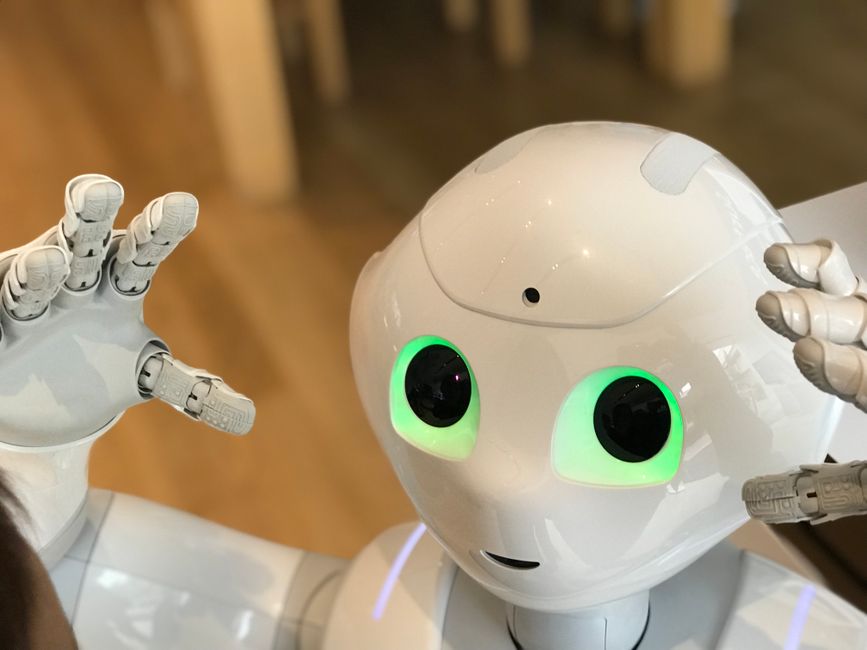
Imagine a world where robots aren't just fascinating machines, but trusted companions, diligent assistants, and powerful tools. This isn't science fiction anymore; it's our rapidly approaching reality, especially here in India! From automated manufacturing lines to delivery drones and even AI-powered tutors, robots are becoming an integral part of our lives. But as we welcome these incredible creations, a crucial question arises: How do we ensure they operate not just efficiently, but also ethically and safely? This isn't just a concern for scientists and engineers; it's a vital discussion for every young innovator, maker, and future leader like you, shaping the world of tomorrow.
Why Robot Ethics and Safety Matter to Everyone
Robotics is no longer confined to industrial factories. We're seeing robots in hospitals assisting surgeons, in schools helping teachers, in homes as smart assistants, and even exploring distant planets. With this increasing presence comes immense responsibility. Every robot, whether it's a simple line-follower or a complex AI-driven humanoid, has the potential to impact human lives and society.
- Impact on Society: Robots can change how we work, learn, and interact. We need to ensure these changes are positive and equitable for everyone.
- Preventing Harm: Just like any powerful technology, robots can cause physical, psychological, or even economic harm if not designed and deployed thoughtfully.
- Building Trust: For people to accept and benefit from robots, they need to trust that these machines are reliable, fair, and safe.
- Legal and Moral Responsibility: When a robot makes a mistake, who is accountable? The programmer, the manufacturer, the operator, or the robot itself? These are complex questions we need to address collectively.
Key Ethical Considerations in Robotics
As we design, build, and deploy robots, several ethical dilemmas come to the forefront. Understanding these helps us build more responsible and beneficial technologies.
Privacy and Data Security
Many modern robots, especially AI-powered ones, collect vast amounts of data about their environment and the people interacting with them. Think about smart home devices listening to conversations or surveillance drones capturing images.
"Data is the new oil, but unlike oil, it can be infinitely refined and reused, posing unique challenges for privacy and control."
This raises critical questions:
- What data is collected? Is it absolutely necessary for the robot's intended function?
- How is it stored and protected? Is it vulnerable to hacking or unauthorized access?
- Who has access to it? Could it be used for unintended purposes, like marketing or surveillance without consent?
- Anonymity: Can data be collected and used without identifying individuals, where possible?
Bias and Discrimination
Robots and AI systems learn from data provided by humans. If this training data is incomplete, skewed, or reflects existing societal biases, the robot will not only reflect but also amplify those biases, leading to unfair or discriminatory outcomes. For example, a recruitment AI trained on historical data might inadvertently favor certain demographics over others, or a facial recognition system trained predominantly on one demographic might perform poorly on others.
This is a critical area, especially in a diverse country like India, where varied appearances, languages, and cultural contexts must be considered to ensure fairness.
- Training Data: Ensuring diverse, representative, and unbiased datasets are used to train AI models.
- Algorithmic Fairness: Developing and testing algorithms that treat all individuals and groups equitably.
- Transparency: Striving for explainable AI (XAI) to understand how an AI makes decisions, which helps in identifying and mitigating potential biases.
Autonomy and Control
As robots become more autonomous, making decisions without direct human input, questions about control and responsibility become paramount. How much independence should a robot have, especially in critical situations like healthcare, warfare, or driving?
- Human Oversight: Ensuring humans can always override, intervene, or shut down a robot's operations when necessary.
- Accountability: Clearly defining who is responsible for a robot's actions when something goes wrong – is it the designer, the manufacturer, the operator, or the owner?
- Ethical Decision-Making: Can we program robots to make 'moral' choices, especially in complex dilemmas (e.g., self-driving car crash scenarios where harm is unavoidable)?
Job Displacement and Socio-Economic Impact
The rise of automation often sparks concerns about robots replacing human jobs. While some jobs may change or become obsolete, new opportunities often emerge, and robots can also augment human capabilities, making work safer, more efficient, and allowing humans to focus on more creative and complex tasks.
The ethical challenge here is to manage this transition responsibly, ensuring education, reskilling, and social safety nets are available to help people adapt to the changing job landscape.
Safety First: Designing for a Secure Future
Beyond ethical considerations, the physical and digital safety of robots is non-negotiable. A robot that is not safe cannot be ethical.
Physical Safety
This involves designing robots that can interact safely with humans and their environment, minimizing the risk of injury or damage.
- Collision Avoidance: Equipping robots with advanced sensors (LIDAR, ultrasonic, cameras, force sensors) to detect obstacles, humans, and other robots, allowing them to stop or reroute.
- Emergency Stop Mechanisms: Clearly marked, easily accessible physical buttons or intuitive voice commands that can immediately halt all robot operations in an emergency.
- Safe Speeds and Forces: Limiting robot movement speeds and applied forces, especially in collaborative robotics where robots work alongside humans.
- Failsafe Design: Engineering robots so that if a component fails, the system defaults to a safe state (e.g., stops moving, retracts arms, or powers down safely).
- Hazard Zones: Clearly defining and communicating safe operating areas and exclusion zones for robots.
Cybersecurity for Robots
A connected robot is a potential target for hackers. Protecting robots from malicious attacks is crucial to prevent them from being weaponized, controlled by unauthorized parties, having their data compromised, or causing unintended harm.
- Secure Software Development: Writing robust, bug-free code with security best practices in mind from the ground up.
- Data Encryption: Protecting sensitive data transmitted to and from robots, and stored within them, using strong encryption methods.
- Authentication and Authorization: Implementing strong user authentication and authorization protocols to ensure only authorized users can control, access, or modify the robot's functions.
- Regular Updates and Patching: Continuously monitoring for security vulnerabilities and providing regular software updates and patches.
- Network Security: Ensuring robots operate on secure networks, isolated from potential threats where necessary.
The Role of AI in Ethical Robotics
Artificial Intelligence is at the heart of many advanced robots, enabling them to perceive, reason, and act. This makes AI itself a critical component in building ethical robots.
Programming Morality?
Can we teach a robot right from wrong? While full human-like morality is incredibly complex, we can encode ethical guidelines and principles into AI algorithms that guide a robot's behavior. Consider a simplified "ethical check" before a robot performs an action:
def ethical_safety_check(action_details, environmental_context):
    # Rule 1: Prioritize human life and well-being
    if action_details.get("risk_to_human_life", False):
        return False, "Action poses unacceptable risk to human life."

    # Rule 2: Respect privacy and data security
    if action_details.get("collects_personal_data", False) and not environmental_context.get("consent_obtained", False):
        return False, "Action violates privacy without explicit consent."

    # Rule 3: Ensure physical safety (e.g., collision avoidance)
    if action_details.get("movement_involved", False) and not environmental_context.get("path_clear", False):
        return False, "Action is unsafe due to potential collision."

    # Rule 4: Avoid bias (simplified - requires complex AI for real-world)
    if action_details.get("distributes_resources", False) and not environmental_context.get("fairness_algorithm_verified", False):
        return False, "Action might lead to biased resource distribution."

    # Rule 5: Environmental impact (simplified)
    if action_details.get("consumes_excessive_energy", False) or action_details.get("produces_harmful_waste", False):
        return False, "Action has negative environmental impact."

    # If all primary checks pass, the action is provisionally ethically and safely permissible.
    return True, "Action appears ethically and safely permissible."

# Example Usage:
# action = {"movement_involved": True, "risk_to_human_life": False}
# context = {"path_clear": False, "consent_obtained": True}
# is_ok, reason = ethical_safety_check(action, context)
# print(f"Is action permissible: {is_ok}, Reason: {reason}")
This simplified pseudocode demonstrates how ethical rules can be integrated, guiding a robot's decision-making process. The real challenge lies in making these rules comprehensive, adaptable, and able to handle the nuances of complex, real-world scenarios, often involving conflicting ethical principles.
Explainable AI (XAI)
For robots making critical decisions, it's not enough for them to just act; we need to understand *why* they acted. Explainable AI (XAI) is a field focused on making AI models more transparent and interpretable. This allows humans to understand, trust, and effectively manage AI-driven robots, identifying potential errors, biases, or unexpected behaviors.
Robot Rights? A Glimpse into the Future
As robots become more sophisticated, some philosophers and futurists ponder the concept of "robot rights." While this is a highly speculative and distant topic, raising questions about consciousness, sentience, and legal personhood for artificial entities, it highlights the profound impact robots could have. For now, our focus remains firmly on human ethics and safety in relation to robots, ensuring they serve humanity responsibly and beneficially.
Your Role in Shaping an Ethical and Safe Robotic Future
As students, innovators, and future engineers at MakerWorks, you are at the forefront of this exciting revolution. You have the power to influence the ethical landscape of robotics.
- Be Curious: Ask critical questions about how robots are designed, programmed, and used. Don't just accept technology; question its implications.
- Learn and Build Responsibly: When you build robots, think deeply about their potential impact. What safety features can you add? How can you ensure they operate fairly?
- Participate in Discussions: Engage with your peers, teachers, and online communities about these important topics. Share your ideas and listen to others' perspectives.
- Advocate for Ethical Design: Encourage the development of robots that prioritize human well-being, privacy, safety, and fairness. Be a voice for responsible innovation.
Conclusion
The journey into the world of robotics is thrilling, filled with endless possibilities. But with great power comes great responsibility. By embracing robot ethics and safety from the very beginning, integrating these principles into every design and deployment, we can ensure that the incredible machines we create truly serve humanity, making our world safer, fairer, and more prosperous. Let's build not just smart robots, but wise ones, together.
Join the MakerWorks Community!
What are your thoughts on robot ethics and safety? Have you encountered any ethical dilemmas in your robotics projects? Share your insights and questions in the comments below or join our forums at MakerWorks. Let's continue this vital conversation and build a responsible future for robotics, right here in India!