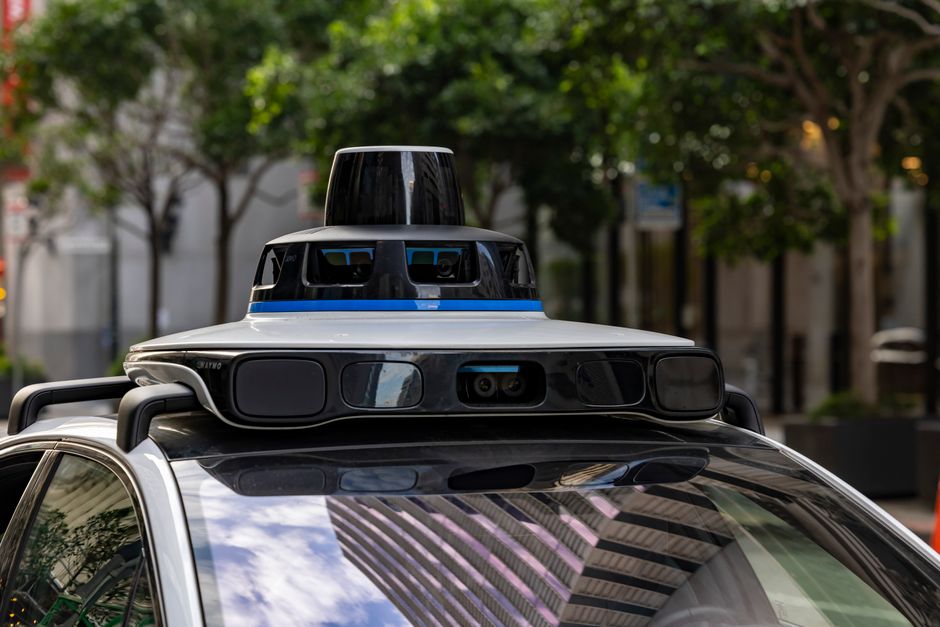
Imagine a world where cars drive themselves, navigating bustling city streets, highways, and even narrow lanes, all without a human touching the steering wheel. This isn't just science fiction anymore; it's the rapidly evolving reality of autonomous vehicles and self-driving technology! At MakerWorks, we believe in exploring the future of robotics, and few areas are as exciting and transformative as autonomous mobility. Join us as we take a deep dive into how these incredible machines work and what the future holds, especially for us here in India.
What Exactly Are Autonomous Vehicles?
An autonomous vehicle (AV), often called a self-driving car, is a vehicle capable of sensing its environment and operating without human involvement. This means it can perceive its surroundings, navigate, and make decisions just like a human driver, but often with greater precision and faster reaction times. The goal is to enhance safety, reduce traffic congestion, and make transportation more accessible and efficient.
“The future of transportation isn't just about moving people; it's about transforming how we interact with our world, making journeys safer, smarter, and more sustainable.”
The Six Levels of Driving Automation
The Society of Automotive Engineers (SAE) defines six levels of driving automation, from no automation to full automation. Understanding these levels helps us grasp the journey of self-driving technology:
- Level 0: No Automation – The human driver does everything. (e.g., your grandmother's old car)
- Level 1: Driver Assistance – The vehicle can assist with either steering OR acceleration/braking. (e.g., Adaptive Cruise Control or Lane Keeping Assist)
- Level 2: Partial Automation – The vehicle can assist with both steering AND acceleration/braking simultaneously. The human driver must remain engaged and monitor the environment. (e.g., Tesla Autopilot, GM Super Cruise)
- Level 3: Conditional Automation – The vehicle can perform all driving tasks under specific conditions, but the human driver must be ready to take over when prompted. (e.g., Audi A8 Traffic Jam Pilot)
- Level 4: High Automation – The vehicle can perform all driving tasks and monitor the driving environment under specific conditions (e.g., within a geofenced area or specific weather). The human driver doesn't need to take over in these conditions. (e.g., Waymo's self-driving taxis in certain cities)
- Level 5: Full Automation – The vehicle can perform all driving tasks under all conditions, human intervention is never required. This is the "driverless" dream. (Not yet commercially available)
How Do Self-Driving Cars "See" and "Understand" the World?
Just like we use our eyes, ears, and brain to navigate, autonomous vehicles rely on an array of sophisticated sensors and powerful computers to perceive their environment. This is where the magic of robotics truly comes alive!
The Eyes and Ears: A Symphony of Sensors
Self-driving cars are packed with various sensors, each playing a crucial role:
- LiDAR (Light Detection and Ranging): Often called the "eyes" of the self-driving car, LiDAR sensors emit pulses of laser light and measure the time it takes for them to return. This creates a highly detailed, 3D map of the car's surroundings, detecting objects, their shape, and distance with incredible accuracy.
- RADAR (Radio Detection and Ranging): Similar to LiDAR but using radio waves, RADAR is excellent for detecting the speed and distance of objects, especially in adverse weather conditions like fog, rain, or snow, where LiDAR might struggle.
- Cameras: These are vital for identifying traffic lights, road signs, lane markings, and classifying objects (e.g., distinguishing a pedestrian from a cyclist). Modern AI uses computer vision techniques to interpret these images.
- Ultrasonic Sensors: These small, affordable sensors use sound waves to detect nearby objects, making them perfect for parking assistance and detecting obstacles at very close range.
- GPS (Global Positioning System) & IMU (Inertial Measurement Unit): GPS provides the car's general location on a map, while the IMU (containing accelerometers and gyroscopes) measures the car's orientation, speed, and acceleration, helping to pinpoint its exact position and movement.
Sensor Fusion: The Brain's Masterpiece
No single sensor can provide all the information an autonomous vehicle needs. This is where sensor fusion comes in. It's the process of combining data from multiple sensors to create a more complete, accurate, and reliable understanding of the environment. Imagine if you could see, hear, and feel everything around you simultaneously – that's what sensor fusion aims to achieve, overcoming the limitations of individual sensors and providing redundancy for safety.
The Brains Behind the Wheels: Software and Artificial Intelligence
Gathering data is just the first step. The real intelligence comes from the software and AI algorithms that process this data and make split-second decisions. This "brain" performs several key functions:
- Perception: This involves processing sensor data to identify and classify objects (other cars, pedestrians, cyclists, traffic lights), detect lane markings, and estimate their speed and trajectory. Machine learning and deep learning models are crucial here.
- Localization: Knowing exactly where the car is on a high-definition map, down to a few centimeters, is critical. This is achieved by combining GPS data with sensor inputs (like LiDAR scans matching known landmarks).
- Path Planning: Once the car knows where it is and what's around it, it needs to decide where to go. This involves planning a safe, efficient, and comfortable path, considering traffic laws, obstacles, and destination.
- Control: Finally, the control system executes the planned path by sending commands to the car's steering, accelerator, and brakes, making smooth adjustments to maintain speed and direction.
A Glimpse into the Code
While the actual code for autonomous vehicles is incredibly complex, involving millions of lines of sophisticated algorithms, we can imagine a simplified decision-making process. Here's a conceptual example:
def autonomous_driving_decision(sensor_data):
    # Process sensor data for objects, lanes, traffic lights
    obstacles = sensor_data["obstacles"]
    traffic_light_status = sensor_data["traffic_light"]
    current_speed = sensor_data["speed"]
    distance_to_car_ahead = sensor_data["distance_ahead"]

    # Decision logic
    if "pedestrian_in_path" in obstacles:
        print("EMERGENCY BRAKE! Pedestrian detected.")
        return "BRAKE_HARD"
    elif traffic_light_status == "RED":
        if current_speed > 0 and distance_to_car_ahead > 5:
            print("Slowing down for red light.")
            return "DECELERATE"
        elif current_speed == 0:
            print("Stopped at red light.")
            return "HOLD_BRAKE"
    elif traffic_light_status == "GREEN":
        if distance_to_car_ahead > 10:
            print("Proceeding, clear path.")
            return "ACCELERATE"
        else:
            print("Maintaining safe distance from car ahead.")
            return "MAINTAIN_SPEED"
    elif distance_to_car_ahead < 5:
        print("Too close to car ahead, slowing down.")
        return "DECELERATE"
    else:
        print("No immediate threats, cruising.")
        return "MAINTAIN_SPEED"

# Example usage (in a continuous loop in a real car)
# current_sensor_readings = {"obstacles": [], "traffic_light": "GREEN", "speed": 60, "distance_ahead": 20}
# action = autonomous_driving_decision(current_sensor_readings)
# print(f"Car takes action: {action}")
This simple code illustrates how a car might process different inputs and decide on an action. Real-world systems use far more complex neural networks and predictive models.
Challenges and The Road Ahead for Autonomous Vehicles
While the potential is immense, several challenges need to be overcome before fully autonomous vehicles become commonplace:
- Safety and Ethics: Ensuring absolute safety is paramount. Ethical dilemmas, such as how an AV should react in unavoidable accident scenarios, are complex and require careful consideration.
- Regulatory Hurdles: Governments worldwide are working on laws and regulations for autonomous vehicles, which vary significantly by region.
- Infrastructure: Many roads lack clear lane markings, consistent signage, or reliable GPS signals, especially in developing regions.
- Weather Conditions: Heavy rain, fog, snow, and dust can impair sensor performance, making driving challenging for AVs.
- Human-Machine Interaction: Designing intuitive ways for humans to interact with and trust AVs is crucial.
The Indian Context: Unique Opportunities and Challenges
For a country like India, autonomous vehicles present both incredible opportunities and unique challenges. Imagine how AVs could:
- Reduce the high number of road accidents.
- Ease traffic congestion in our bustling cities.
- Provide greater mobility for the elderly and differently-abled.
However, India's diverse and often unpredictable road conditions – from unmarked roads and mixed traffic (cars, bikes, rickshaws, pedestrians, animals) to varying infrastructure and driving behaviors – pose significant hurdles. Developing AVs that can reliably navigate this complexity will require localized innovation and robust AI training on Indian datasets. This is where young Indian minds can truly make a difference!
Your Future with MakerWorks and Autonomous Technology
The field of autonomous vehicles is a melting pot of robotics, artificial intelligence, computer vision, electrical engineering, and software development. It's a field ripe for innovation, and the skills you learn in STEM – problem-solving, coding, design, and critical thinking – are exactly what's needed to shape this future.
At MakerWorks, we encourage you to explore these fascinating areas. Whether it's building a simple line-following robot, programming a drone, or delving into AI concepts, every step you take brings you closer to understanding and contributing to technologies like self-driving cars. Who knows, the next breakthrough in autonomous navigation might come from one of you!
Conclusion: Driving Towards a Smarter Tomorrow
Autonomous vehicles are more than just cars that drive themselves; they represent a paradigm shift in transportation, offering the promise of safer, more efficient, and more accessible mobility. While the journey to full autonomy is still ongoing, the progress made is astounding, driven by brilliant minds and cutting-edge technology. The future of self-driving cars is not just about technology; it's about reimagining our cities, our commutes, and our connection to the world around us.
Are you excited to be a part of this revolution? Start your journey today! Explore robotics kits, join a coding club, or participate in a STEM workshop at MakerWorks. The road to innovation is open, and your skills can help pave the way for a smarter, autonomous tomorrow!