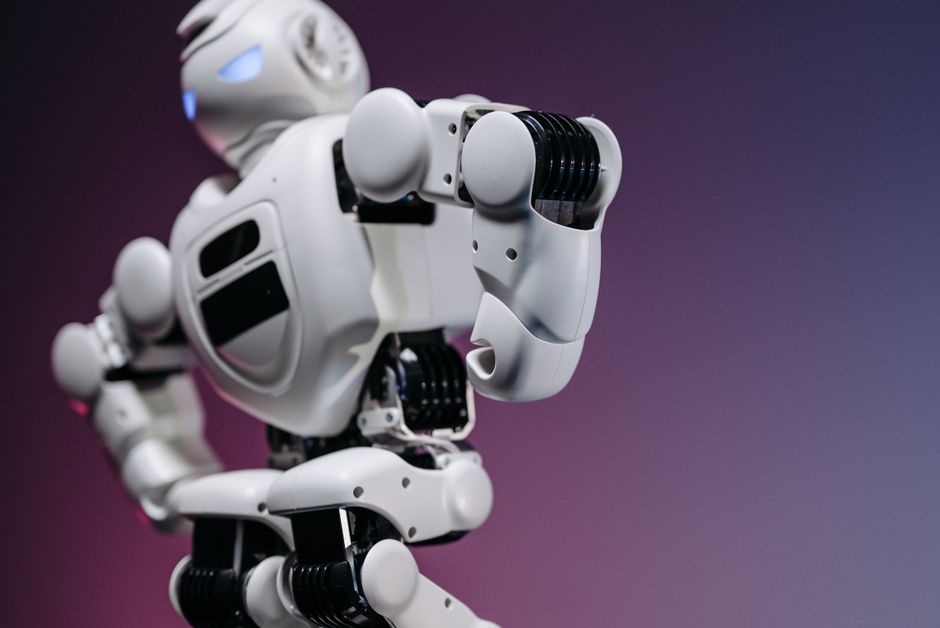
Imagine thousands of tiny robots, not controlled by a single master brain, but working together like a colony of ants or a flock of birds, achieving incredible feats. This isn't science fiction anymore; it's the captivating world of Swarm Robotics! Inspired by the collective intelligence seen in nature, this cutting-edge field explores how multiple simple robots can coordinate to accomplish complex tasks that would be impossible for a single robot alone.
What is Swarm Robotics? Nature's Blueprint for Robots
At its core, Swarm Robotics is about designing and programming groups of robots – often called "agents" or "bots" – to work together to solve problems. Think about how a colony of ants builds intricate nests, finds food, and defends itself, all without a central leader barking orders. Each ant follows a few simple rules, and from these individual actions, complex collective behaviors emerge.
In swarm robotics, we apply similar principles. Instead of building one giant, super-intelligent, and expensive robot, we create many smaller, simpler, and often less expensive robots. These robots communicate with each other (or simply react to their local environment and each other's presence) and follow basic rules. The magic happens when these simple interactions scale up, leading to sophisticated group behaviors.
Key Principles of Swarm Robotics:
- Decentralization: There's no single "brain" or leader controlling the entire swarm. Each robot makes decisions based on its local information. This makes the swarm incredibly robust!
- Local Interactions: Robots typically only interact with their immediate neighbors or their local environment. They don't need a global map or a complete picture of the entire system.
- Emergent Behavior: Complex, intelligent behavior arises from the combination of many simple individual actions. It's like a puzzle where each piece is simple, but the complete picture is amazing.
- Redundancy: If one or a few robots fail, the rest of the swarm can often continue the task without significant disruption. This is a huge advantage over single, complex robots.
Why Swarm Robotics? The Power of Many
You might be wondering, why go through the trouble of managing many robots when one could potentially do the job? Swarm robotics offers several compelling advantages:
- Robustness and Fault Tolerance: If a single robot breaks down, the mission doesn't necessarily fail. The remaining robots can pick up the slack, making the system highly resilient.
- Scalability: It's often easier to add more simple robots to a swarm to tackle a larger or more complex problem than to redesign a single, more powerful robot.
- Flexibility and Adaptability: Swarms can adapt to changing environments or unexpected obstacles more readily. Their collective intelligence allows them to find new ways to complete tasks.
- Cost-Effectiveness: Building many simple robots can sometimes be cheaper than designing and manufacturing one highly sophisticated, multi-functional robot, making advanced robotics more accessible.
How Does it Work? The "Magic" Behind Coordinated Swarms
The real marvel of swarm robotics lies in how complex, intelligent behavior emerges from incredibly simple rules. It's not about programming each robot for every possible scenario, but rather giving them a few basic guidelines to follow.
Simple Rules, Complex Outcomes:
Think about a flock of birds. Each bird isn't following a leader; instead, it follows three simple rules:
- Separation: Avoid crowding neighbors.
- Alignment: Steer towards the average heading of neighbors.
- Cohesion: Steer towards the average position of neighbors.
When thousands of birds follow these rules, you get breathtaking, coordinated aerial ballets. Swarm robots use similar principles, often involving rules like "move towards the light source," "avoid collisions with nearby robots," "follow the pheromone trail (digital equivalent)," or "move away from obstacles."
Sensing and Communication:
For robots to follow these rules, they need to sense their environment and sometimes communicate with each other. This can involve:
- Infrared (IR) Sensors: To detect proximity to other robots or obstacles.
- Light Sensors: To navigate towards light sources or distinguish patterns.
- Radio Communication: For sharing simple messages like "I found the target!" or "My battery is low."
- Vision Systems: Tiny cameras for more advanced environmental perception.
Often, the communication is implicit – a robot might simply react to the presence or absence of another robot in its immediate vicinity, without needing to send an explicit message.
Applications of Swarm Robotics: From Deep Space to Your Farm
The potential applications of swarm robotics are vast and truly exciting. Here are just a few areas where swarms are making a difference or are poised to in the near future:
- Exploration: Swarms of tiny robots can explore the surface of Mars or map the deep ocean, covering vast areas faster than a single rover.
- Search and Rescue: In disaster zones, small, agile swarm robots can navigate tight spaces, locate survivors, and assess damage more safely and efficiently.
- Environmental Monitoring: Aquatic robots can monitor water quality, while aerial swarms track air quality or deforestation.
- Agriculture: Robotic "pollinators" could assist natural bees, or swarms could monitor crop health and optimize irrigation.
- Construction: Robots could collectively assemble structures, repair infrastructure, or even 3D print buildings on a large scale.
- Logistics and Warehousing: Swarms can efficiently sort, move, and organize packages in large warehouses, speeding up operations.
- Entertainment and Art: Elaborate drone shows, where hundreds of drones fly in perfect synchronization, are a popular example of swarm robotics in action.
"Nature has already perfected swarm intelligence over millions of years. Our job is to understand its principles and translate them into robust, scalable, and intelligent robotic systems."
— A leading researcher in Swarm Robotics
A Glimpse into the Code: Simple Swarm Behavior
While the algorithms for complex swarm behaviors can be quite intricate, the core idea often starts with simple, local rules. Here's a highly simplified, conceptual Python-like code snippet for a single robot in a swarm trying to move towards a target while avoiding collisions with neighbors:
class SwarmRobot:
    def __init__(self, id, position, target):
        self.id = id
        self.position = position
        self.target = target
        self.speed = 0.5
        self.avoidance_radius = 5.0 # Distance to keep from neighbors

    def update_behavior(self, nearby_robots):
        # Rule 1: Move towards the target
        # (Assuming 'position' and 'target' are vector-like objects with normalize() and magnitude() methods)
        direction_to_target = self.target - self.position
        self.velocity = direction_to_target.normalize() * self.speed

        # Rule 2: Avoid nearby robots
        for neighbor in nearby_robots:
            distance = (self.position - neighbor.position).magnitude()
            if distance < self.avoidance_radius:
                # If too close, push away from neighbor, stronger push if closer
                avoid_vector = (self.position - neighbor.position).normalize()
                self.velocity += avoid_vector * (self.speed * (1 - distance / self.avoidance_radius))

        # Update position based on final calculated velocity
        self.position += self.velocity
This snippet illustrates how a robot balances conflicting goals (moving towards a target vs. avoiding collisions) using simple vector math. In a real swarm, there would be many more rules and more sophisticated ways for robots to perceive and react to each other.
Challenges and the Future of Swarm Robotics
While incredibly promising, swarm robotics also faces challenges:
- Complex Coordination: Designing simple rules that lead to predictable and desired complex behaviors can be tricky.
- Power Management: Ensuring that thousands of small robots have enough power for extended missions is a significant hurdle.
- Communication Overhead: While often local, managing communication for very large swarms can still be complex.
- Ethical Considerations: As swarms become more autonomous and capable, questions about their control, responsibility, and potential misuse will become increasingly important.
Despite these challenges, the future of swarm robotics is incredibly bright. Researchers are constantly developing new algorithms, more efficient communication methods, and more robust hardware. We are moving towards a future where autonomous swarms could revolutionize everything from space exploration to healthcare, making our world safer, more efficient, and more connected.
Conclusion: The Collective Power Awaits!
Swarm robotics is a testament to the idea that sometimes, the simplest components, when working together, can achieve the most extraordinary results. It's a field that beautifully blends biology, computer science, and engineering, inviting us to think differently about problem-solving. From the synchronized flight of starlings to the efficient foraging of ants, nature has given us the ultimate blueprint for collective intelligence, and now, we're bringing it to life in the world of robots.
Are you inspired by the power of many? Do you dream of building robots that work together to solve real-world problems? At MakerWorks, we believe in empowering the next generation of innovators. Explore our courses, workshops, and resources to dive deeper into robotics, programming, and AI. Start your journey into the fascinating world of swarm robotics today and help us build the future, one robot (or many!) at a time!