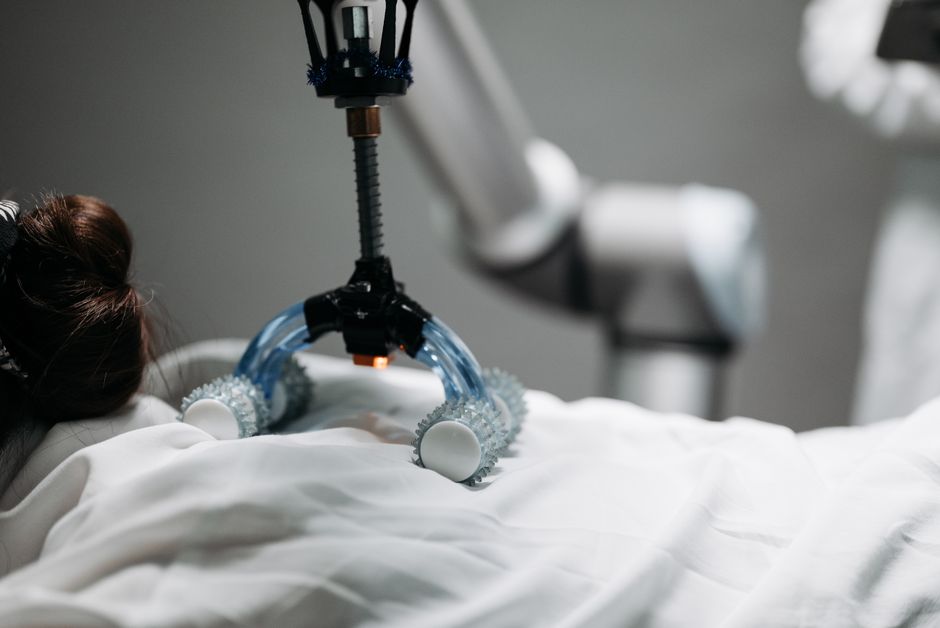
Imagine a robot that doesn't clank or whir, but rather stretches, twists, and squeezes, as soft and adaptable as an octopus's arm or an elephant's trunk. For decades, robots have been synonymous with rigid metal and precise, often dangerous, movements. But what if we told you there's a revolutionary field where robots are built from squishy, flexible materials like silicone and rubber? Welcome to the fascinating world of Soft Robotics, where the future of automation is surprisingly squishy!
What Exactly Are Soft Robots?
Unlike traditional "hard" robots made of stiff components like metal and rigid plastics, soft robots are constructed primarily from highly compliant, deformable materials. Think of them as the opposite of industrial factory robots you might have seen – instead of being designed for speed and strength in highly structured environments, soft robots excel in adaptability, safety, and interaction with delicate objects or unpredictable surroundings.
Their flexibility isn't just a design choice; it's their core functional principle. This allows them to change shape dramatically, absorb impacts, and conform to irregular surfaces, opening up a whole new realm of possibilities that rigid robots simply cannot achieve.
Why Soft Robotics? The Power of Flexibility
The shift from rigid to soft brings a host of compelling advantages:
- Enhanced Safety: Imagine a robot working alongside humans. A rigid robot could accidentally cause injury, but a soft robot, designed to yield and deform, significantly reduces this risk. This is crucial for collaborative robotics (cobots) in homes and workplaces.
- Adaptability to Unstructured Environments: The real world is messy and unpredictable. Soft robots can squeeze through tight spaces, navigate uneven terrain, and grip objects of varying shapes and sizes without needing complex sensors or precise programming for every scenario.
- Delicate Manipulation: Picking up a ripe tomato, handling fragile biological samples, or assisting in surgery requires a gentle touch. Soft grippers can conform perfectly to an object's shape, distributing pressure evenly and preventing damage.
- Bio-inspiration: Nature is full of incredible soft "machines" – octopuses, caterpillars, human muscles. Soft robotics often draws inspiration from these biological systems, mimicking their incredible dexterity and resilience.
- Simplified Control: Sometimes, the material's compliance itself can perform part of the "thinking," simplifying the control algorithms needed compared to a rigid robot.
"The future of robotics isn't just about making robots smarter, but also about making them softer, safer, and more integrated into our human world."
How Do Soft Robots Work? The Science Behind the Squish
Building a robot out of soft materials presents unique engineering challenges. How do you make something squishy move with purpose? The answer lies in clever design and innovative actuation methods.
Flexible Materials: The Building Blocks
The most common materials used include:
- Silicone: Extremely versatile, durable, and biocompatible, making it ideal for many applications.
- Rubber and Elastomers: Offer good elasticity and resilience.
- Hydrogels: Water-filled polymers that can change shape in response to stimuli like temperature or pH.
Actuation Mechanisms: Making Them Move
Since motors and gears don't easily integrate into soft bodies, soft robots use different methods to generate movement:
-
Pneumatic/Hydraulic Actuation:
This is one of the most common and effective methods. Air (pneumatic) or liquid (hydraulic) is pumped into internal channels or chambers within the soft robot's body. As these chambers inflate, they cause the surrounding material to expand, bend, or contract in a controlled manner. Think of inflating a balloon to make it expand, but in a precise, engineered way.
- PneuNets (Pneumatic Networks): These are often arrays of internal channels that, when pressurized, cause a specific bending or curling motion.
- McKibben Actuators: A classic example, these are essentially braided sleeves around an inflatable bladder. When inflated, the bladder expands, and the sleeve contracts, pulling on whatever it's attached to.
-
Electroactive Polymers (EAPs):
These "artificial muscles" change shape or size when an electric voltage is applied. They offer high power density but often require high voltages.
-
Shape Memory Alloys (SMAs):
These metal alloys can "remember" an original shape and return to it when heated, offering a way to create controlled deformation and recovery.
-
Thermal Actuation:
Some materials are designed to change shape or stiffness when heated, often using embedded resistive wires.
Sensing the World: How Soft Robots "Feel"
To interact effectively, soft robots need to sense their environment. This is achieved by embedding flexible sensors directly into their soft bodies. These can be strain sensors (to detect bending or stretching), pressure sensors, or even optical sensors that measure light changes within the material to infer deformation.
Bio-inspired Design: Learning from Nature
Many of the most innovative soft robot designs are directly inspired by biology:
- Octopus Arms: With no bones, an octopus arm can twist, bend, and grasp with incredible dexterity. Soft robotic grippers and manipulators often mimic this boneless structure.
- Elephant Trunks: Capable of both powerful lifting and delicate manipulation, an elephant's trunk inspires multi-segment soft robots.
- Caterpillars and Worms: Their locomotion, achieved through rhythmic body contractions and expansions, has led to designs for soft crawling robots.
- Muscles: The way our muscles contract and relax to produce movement is a constant source of inspiration for soft actuators.
Applications of Soft Robotics: Impacting Our World
The unique capabilities of soft robots are opening doors in numerous fields:
- Healthcare:
- Rehabilitation: Soft exoskeletons and wearable devices can assist patients with movement disorders or recovering from injuries, providing gentle support.
- Surgical Tools: Flexible endoscopes and grippers can navigate complex anatomical structures with minimal invasiveness.
- Prosthetics: More natural-feeling and functional prosthetic hands and limbs.
- Exploration:
- Deep-Sea Exploration: Soft robots can withstand extreme pressures and navigate fragile marine environments without causing damage.
- Space Exploration: Imagine robots that can squeeze into crevices on other planets or handle delicate samples.
- Manufacturing and Logistics:
- Delicate Gripping: Handling fragile electronics, fresh produce, or oddly shaped items without damage.
- Collaborative Robotics: Working safely alongside human factory workers.
- Search and Rescue: Soft robots can crawl through rubble or narrow passages to locate survivors in disaster zones.
- Wearable Technology: Smart clothing that adapts to the wearer's body for comfort or performance enhancement.
Getting Started with Soft Robotics: Your Maker Journey!
The best part about soft robotics is that you don't need a high-tech lab to start experimenting! Many principles can be explored with simple materials:
- Materials: Balloons, syringes, plastic tubing, silicone caulk, cornstarch, and even gelatin can be starting points.
- Simple Actuators: Try making simple pneumatic actuators using balloons inside flexible tubes or creating basic PneuNets by casting silicone.
- Design and Fabrication: Experiment with 3D printing molds for silicone casting, or even just hand-sculpting.
To control these simple actuators, you can use basic electronics like an Arduino board to open and close air valves or control pumps. Here's a conceptual example of how you might control a simple pneumatic actuator using an Arduino:
// Conceptual Arduino code for controlling a simple pneumatic actuator
// This assumes an Arduino board connected to a solenoid valve via a relay.

const int solenoidPin = 9; // Digital pin connected to the relay controlling the solenoid valve

void setup() {
  pinMode(solenoidPin, OUTPUT); // Set the solenoid pin as an output
  Serial.begin(9600);           // Initialize serial communication for debugging
  Serial.println("Soft robot actuator control ready!");
}

void loop() {
  // Activate the actuator (inflate/extend)
  digitalWrite(solenoidPin, HIGH); // Turn on the solenoid valve (e.g., open air path)
  Serial.println("Actuator ON (inflating)");
  delay(3000); // Keep actuator active for 3 seconds

  // Deactivate the actuator (deflate/retract)
  digitalWrite(solenoidPin, LOW);  // Turn off the solenoid valve (e.g., close air path/vent)
  Serial.println("Actuator OFF (deflating)");
  delay(2000); // Keep actuator inactive for 2 seconds

  // You could add sensor input here to make it interactive!
  // E.g., if (sensorValue > threshold) { digitalWrite(solenoidPin, HIGH); }
}
This code snippet shows how an Arduino could switch a solenoid valve on and off, controlling the airflow to a pneumatic soft robot. It's a fundamental step in bringing your squishy creations to life!
The Future is Soft and Bright!
Soft robotics is still a relatively young field, facing challenges like precise control, energy efficiency, and durability. However, the potential is enormous. Imagine robots that can assist the elderly with gentle care, explore environments too dangerous for humans, or even become part of our bodies as advanced medical implants. The possibilities are as limitless as our imagination.
At MakerWorks, we believe in empowering the next generation of innovators. Soft robotics is an exciting frontier that combines engineering, material science, biology, and creativity. Are you ready to dive into this squishy revolution and build the robots of tomorrow? Start experimenting, ask questions, and let your curiosity lead the way!