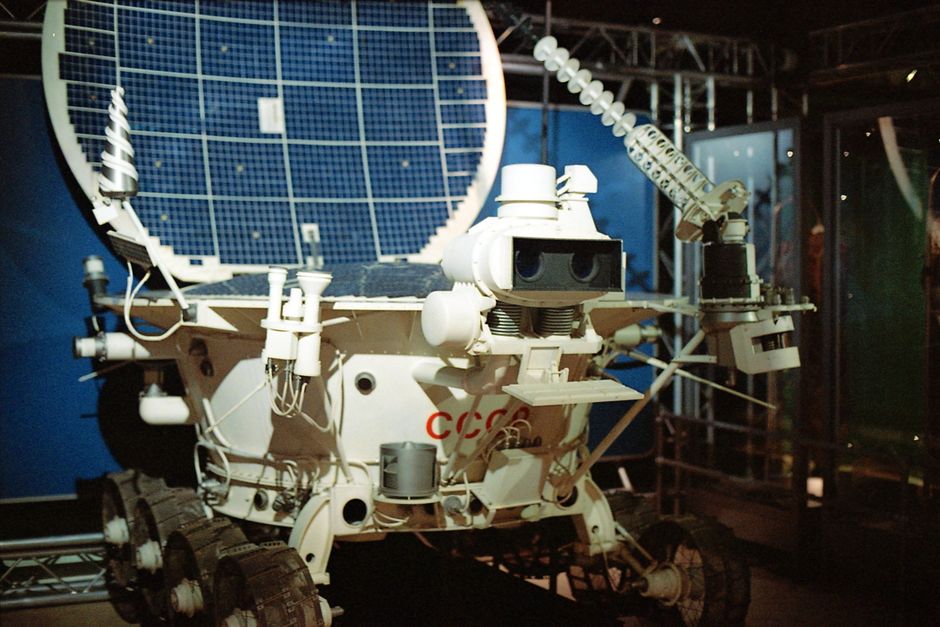
Imagine a world where humans couldn't survive – a vacuum filled with radiation, extreme temperatures, and unimaginable distances. Yet, our innate curiosity compels us to explore these very frontiers. How do we reach out, touch distant planets, and unravel cosmic mysteries without putting human lives at unimaginable risk? The answer lies in the incredible ingenuity of space robots! From tiny drones hovering over Martian craters to massive probes venturing into the outer solar system, these mechanical marvels are our eyes, ears, and hands in the cosmos. They are the ultimate explorers, pushing the boundaries of what's possible, and opening up new frontiers for humanity's understanding of the universe.
Why Robots are Our Best Astronauts in Space
Sending humans into space is an extraordinary feat, but it's also incredibly complex, dangerous, and expensive. This is where robots shine. They offer a unique set of advantages that make them indispensable for deep space exploration and hazardous orbital operations:
- Safety First: Space is a hostile environment. Intense radiation, extreme hot and cold, and the vacuum itself are deadly to humans. Robots can operate in these conditions for extended periods without needing life support, food, or sleep.
- Precision and Endurance: Robots don't get tired, bored, or make mistakes due to fatigue. They can perform repetitive, highly precise tasks for years, tirelessly collecting data, analyzing samples, or repairing equipment.
- Cost-Effectiveness: While space missions are always expensive, sending robots is generally more economical than sending humans. Human missions require vast amounts of life support, more robust spacecraft, and complex return systems, all of which add significantly to the cost.
- Reaching the Unreachable: Robots can go to places too dangerous or too far for humans right now. Think about probes flying through Jupiter's intense radiation belts or landing on Venus's scorching, high-pressure surface – feats no human could survive.
"Robots are not just tools; they are our partners in exploration, extending our senses and capabilities into realms otherwise inaccessible to human touch."
Pioneers of Planetary Exploration: The Mars Rovers
When we talk about space robots, the first image that often comes to mind is a Mars rover. These six-wheeled laboratories have captivated the world, sending back breathtaking images and groundbreaking scientific data from the Red Planet. India's own Mars Orbiter Mission (Mangalyaan) also showcased our nation's prowess in space exploration, observing the planet from orbit.
Spirit and Opportunity: The Marathon Twins
Launched in 2003, NASA's Mars Exploration Rovers, Spirit and Opportunity, were designed for a 90-sol (Martian day) mission. They defied expectations, lasting for years! Spirit operated for over six years, and Opportunity for an astonishing 14 years, covering over 45 kilometers. Their primary mission was to search for signs of past water activity on Mars, and they found ample evidence, fundamentally changing our understanding of the planet's history.
Curiosity: The Mobile Science Lab
Landing in 2012, the Mars Science Laboratory rover, Curiosity, is a much larger and more advanced robot, about the size of a small car. Powered by a radioisotope thermoelectric generator (RTG), it carries a sophisticated suite of instruments to analyze rocks and soil. Curiosity's main goal is to determine if Mars ever had environmental conditions favorable for microbial life. It has found evidence of ancient lakebeds and organic molecules, hinting at a potentially habitable past.
Perseverance and Ingenuity: The Dynamic Duo
The latest and most advanced rover, Perseverance, landed in 2021. It's designed to search for signs of ancient microbial life, collect rock and soil samples, and prepare them for a future mission to bring them back to Earth. But Perseverance didn't travel alone; it brought a companion: Ingenuity, the first helicopter to fly on another planet! Ingenuity's successful flights proved that controlled flight is possible in Mars' thin atmosphere, opening up new possibilities for aerial exploration.
Controlling these rovers from Earth is a monumental task due to the immense distances. Commands travel at the speed of light, but even light takes time to cross millions of kilometers. This results in significant communication delays, meaning engineers have to plan operations carefully, sometimes days in advance.
# Python example: Calculating communication delay to Mars
# Imagine sending a command from Earth to a Mars rover!

distance_to_mars_km = 225_000_000  # Average distance Earth to Mars in kilometers
speed_of_light_km_per_sec = 299_792.458 # Speed of light in km/s

# Calculate one-way travel time
time_seconds = distance_to_mars_km / speed_of_light_km_per_sec
time_minutes = time_seconds / 60

print(f"One-way communication delay to Mars: {time_minutes:.2f} minutes.")
print(f"This means a command takes over {int(time_minutes)} minutes to reach the rover!")
As you can see, even a simple command can take many minutes to reach the rover, and just as long for the rover's response to come back! This makes autonomous capabilities extremely important for space robots.
Beyond Mars: Exploring the Solar System and Beyond
Our robotic explorers aren't just limited to Mars. They have ventured to the farthest reaches of our solar system and even beyond:
- Voyager 1 & 2: Launched in 1977, these twin probes completed a "Grand Tour" of the outer planets (Jupiter, Saturn, Uranus, Neptune). Today, they are the farthest human-made objects from Earth, cruising through interstellar space and still sending back faint signals.
- Cassini-Huygens: This mission to Saturn and its moons (1997-2017) provided unprecedented views of the ringed planet, discovered new moons, and even landed the Huygens probe on the mysterious moon Titan.
- Europa Clipper (Future): Scheduled for launch, this NASA mission will conduct detailed reconnaissance of Jupiter's moon Europa to investigate whether it has the potential for life in its subsurface ocean.
Robots in Orbit: Satellite Servicing and Assembly
Space robots aren't just for distant planets. They play a crucial role much closer to home, in Earth orbit, helping maintain our vital space infrastructure.
The International Space Station (ISS) and Robotic Arms
The ISS is a testament to international cooperation and robotic assistance. Its iconic robotic arms, like the Canadian-built Canadarm2 and Dextre, are indispensable. They are used for:
- Assembling new modules and components.
- Grappling visiting cargo spacecraft (like SpaceX Dragon and Cygnus).
- Assisting astronauts during spacewalks by positioning tools and equipment.
- Inspecting the station's exterior for damage.
These robotic arms are operated by astronauts inside the station or by flight controllers on Earth, showcasing complex teleoperation.
The Future of On-Orbit Robotics
Imagine a future where robots can refuel aging satellites, repair damaged components, or even assemble massive telescopes and power stations directly in space. This is no longer science fiction! Missions like NASA's Robotic Refueling Mission (RRM) have demonstrated the feasibility of remotely controlled robotic arms performing complex satellite servicing tasks. This technology promises to extend the lifespan of satellites, reduce space debris, and make space operations more sustainable.
The Future is Robotic: Next-Generation Space Exploration
The journey of space robotics is just beginning. As technology advances, so too do the capabilities and ambitions of our mechanical explorers:
- Artificial Intelligence and Machine Learning: Future robots will be even more autonomous, making complex decisions on their own in real-time, especially crucial for missions with significant communication delays.
- Swarm Robotics: Imagine dozens or hundreds of small, cooperative robots exploring an alien cave system or mapping a vast asteroid. Swarms can cover more ground, provide redundancy, and perform tasks beyond the capability of a single robot.
- In-Situ Resource Utilization (ISRU): Robots will be key to "living off the land" on the Moon and Mars. They could mine water ice to produce breathable oxygen and rocket fuel, or extract materials to build habitats and infrastructure.
- Human-Robot Collaboration: As humans return to the Moon and eventually journey to Mars, robots will work alongside astronauts, performing hazardous tasks, assisting with construction, and providing crucial support.
Embark on Your Own Robotic Journey with MakerWorks!
Space robotics is a field brimming with innovation, challenges, and endless possibilities. It's a testament to human ingenuity and our relentless drive to explore. The next generation of space engineers, roboticists, and explorers will be the ones who design, build, and program these incredible machines.
Are you fascinated by the idea of building robots that could explore distant worlds or help humans live among the stars? At MakerWorks, we believe that every young mind has the potential to be a future space engineer or roboticist. Our hands-on robotics and STEM programs are designed to ignite your passion, teach you practical skills, and prepare you for a future where you can contribute to these awe-inspiring missions.
Ready to build your own future in space? Explore our courses, workshops, and robotics kits to start your journey into the exciting world of robotics and STEM. The universe is waiting for you to explore it!