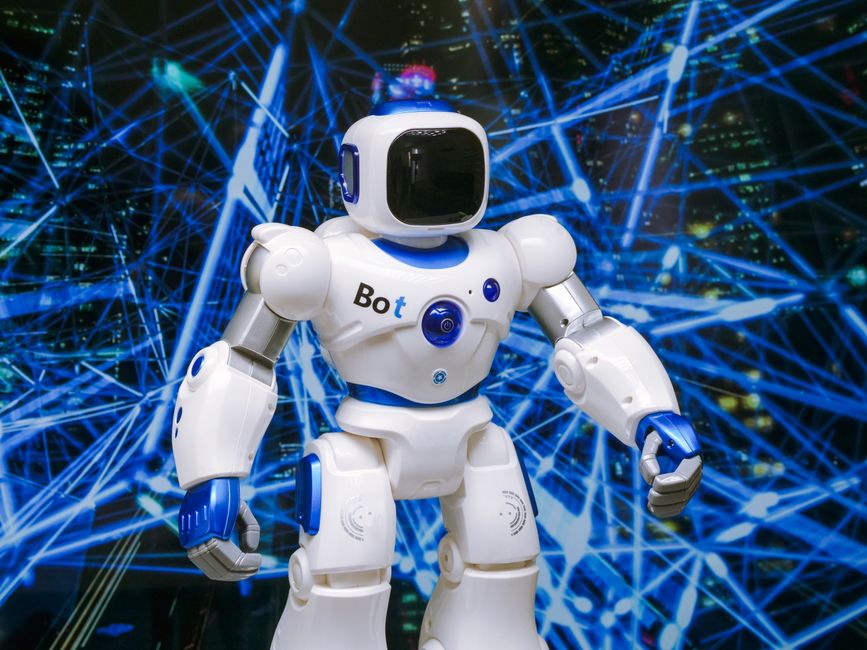
Imagine a world where robots don't just build cars in factories, but walk among us, assist in our homes, and even explore distant planets. This isn't just science fiction anymore! Humanoid robots, those fascinating machines designed to resemble and interact with the world like humans, are rapidly moving from the realm of dreams to tangible reality. Coupled with the incredible power of Artificial Intelligence (AI), these bipedal marvels are set to redefine our future in ways we're only just beginning to comprehend.
What Exactly Are Humanoid Robots?
At its core, a humanoid robot is a robot built to mimic the human body. This usually means having a torso, a head, two arms, and most crucially, two legs for bipedal locomotion. Why try to make robots walk like us? Because our world, from staircases to doorknobs, is designed for humans. A robot that can navigate and manipulate its environment in a human-like way has the potential to perform a vast array of tasks currently done by people.
The challenge, however, is immense. Walking on two legs, maintaining balance, and performing complex actions with hands are things we humans do effortlessly, but they require incredibly sophisticated engineering and intelligent control systems for a robot.
The Rise of Humanoids: Pioneers and Visionaries
The journey of humanoid robots has been long, but recent advancements, especially in robotics and AI, have accelerated their development dramatically. Two names often dominate the headlines:
Boston Dynamics: Masters of Movement
You've probably seen their incredible videos – robots performing backflips, parkour, and dancing with astounding agility. Boston Dynamics, a company renowned for its dynamic robots, has pushed the boundaries of bipedal locomotion. Their most famous humanoid, Atlas, is a research platform that demonstrates remarkable balance, dexterity, and navigation capabilities.
"Our mission is to imagine and create exceptional robots that enrich people's lives." - Boston Dynamics
Atlas isn't designed for commercial sale yet, but it serves as a testament to what's possible when cutting-edge mechanical design meets advanced control algorithms. Watching Atlas gracefully traverse uneven terrain or pick up and manipulate objects feels like witnessing a glimpse into the future.
Tesla Optimus: The Vision of a General-Purpose Helper
While Boston Dynamics focuses on extreme agility, Tesla's Optimus (also known as "Tesla Bot") aims for a different, yet equally ambitious, goal: a mass-produced, general-purpose humanoid robot that can perform repetitive, dangerous, or boring tasks currently done by humans. Envisioned to be relatively affordable and capable of learning a wide range of skills, Optimus represents a vision of humanoids as everyday companions and workers.
Optimus is designed to operate in environments built for humans, using the same tools and performing similar actions. This requires not just physical capability but also sophisticated AI to understand human commands, adapt to new situations, and safely interact with its surroundings.
AI: The Brain Behind the Brawn
What makes these metal marvels more than just fancy machines? It's Artificial Intelligence. AI is the "brain" that allows humanoids to perceive, understand, learn, and make decisions. Without AI, a humanoid robot would just be an inert collection of wires and motors.
Key AI components powering humanoid robots include:
- Computer Vision: Enabling robots to "see" and interpret their surroundings using cameras, much like our eyes. This helps them recognize objects, people, and navigate obstacles.
- Natural Language Processing (NLP): Allowing robots to understand and respond to human speech and text, facilitating natural interaction.
- Machine Learning: The ability for robots to learn from data and experience, improving their performance over time without being explicitly programmed for every single scenario. This is crucial for adapting to new tasks and environments.
- Path Planning & Navigation: Algorithms that help robots figure out the best way to move from one point to another while avoiding collisions.
Here's a simplified conceptual example of how a robot might use AI to decide its next action based on sensor input:
# Simple conceptual pseudocode for a robot's decision loop

def robot_decision_loop():
    while True:
        # 1. Sense the environment
        sensor_data = get_sensor_readings() # e.g., camera, lidar, touch sensors

        # 2. Process and understand data using AI
        environment_state = analyze_environment(sensor_data)

        # 3. Make a decision based on goals and environment
        if "obstacle_detected" in environment_state and environment_state["obstacle_distance"] < 1.0:
            print("Obstacle too close! Initiating evasive maneuver.")
            move_robot("turn_left")
            move_robot("take_step_back")
        elif "human_detected" in environment_state and environment_state["human_intent"] == "greet":
            print("Human detected, greeting.")
            perform_gesture("wave")
            speak("Hello there!")
        elif "task_pending" in environment_state:
            print(f"Task '{environment_state['task_name']}' pending. Executing.")
            execute_task(environment_state["task_name"])
        else:
            print("No immediate threats or tasks. Exploring or waiting.")
            move_robot("idle_motion")

        time.sleep(0.5) # Wait a bit before next decision
This simple snippet shows how a robot constantly takes in information, processes it with its "brain" (AI), and then decides on the most appropriate action, just like we do!
Applications and the Future of Humanoids
The potential applications for humanoid robots are vast and incredibly exciting:
- Manufacturing and Logistics: Performing repetitive or dangerous tasks on assembly lines, in warehouses, or loading/unloading goods.
- Healthcare and Eldercare: Assisting patients, delivering medications, providing companionship, or helping with rehabilitation exercises.
- Exploration and Disaster Relief: Operating in environments too dangerous or inaccessible for humans, such as space, deep-sea, or disaster zones.
- Education and Entertainment: Acting as interactive tutors, tour guides, or performers in theme parks.
- Domestic Assistance: Helping with household chores, cooking, or general home maintenance.
Imagine a future where a humanoid robot helps you carry groceries, a robot assistant in a hospital safely delivers medicines, or a robot explorer ventures onto Mars. These aren't far-fetched ideas; they are active areas of research and development right now!
Challenges and Ethical Considerations
While the future looks bright, there are significant hurdles to overcome:
- Cost and Mass Production: Making humanoids affordable and scalable for widespread use.
- Dexterity and Fine Manipulation: Giving robots the ability to handle delicate objects with human-like precision.
- Battery Life: Ensuring robots can operate for extended periods without frequent recharging.
- Robust AI: Developing AI that can handle unexpected situations, make ethical decisions, and truly understand complex human interactions.
- Job Displacement: The potential impact on human employment as robots take over certain tasks. This requires careful societal planning.
- Safety and Trust: Ensuring robots are safe to be around and that humans can trust them with important tasks.
Your Role in Shaping the Future
The world of humanoid robots and AI is rapidly evolving, and India is poised to be a major player. This isn't just for scientists in labs; it's for curious minds like yours!
If you're fascinated by these walking wonders, here's how you can start your journey:
- Learn STEM Fundamentals: Dive into Science, Technology, Engineering, and Mathematics. These are the building blocks of robotics.
- Explore Programming: Start with languages like Python. It's widely used in AI and robotics and is beginner-friendly.
- Join Robotics Clubs: Many schools and communities, including MakerWorks, offer robotics programs where you can get hands-on experience.
- Build Your Own Robots: Start with simple kits like Arduino or Raspberry Pi. Experimenting is the best way to learn!
- Stay Curious: Read books, watch documentaries, and follow the latest news in AI and robotics.
Conclusion
Humanoid robots, powered by advanced AI, are no longer just characters in movies. They are becoming a tangible part of our reality, promising to revolutionize industries, assist us in our daily lives, and expand the horizons of human endeavor. From the agile feats of Boston Dynamics' Atlas to the ambitious vision of Tesla's Optimus, the journey is just beginning. As young innovators and enthusiasts in India, you have a unique opportunity to contribute to this exciting future. The next generation of robotics pioneers starts with you – imagine, create, and build a better tomorrow!