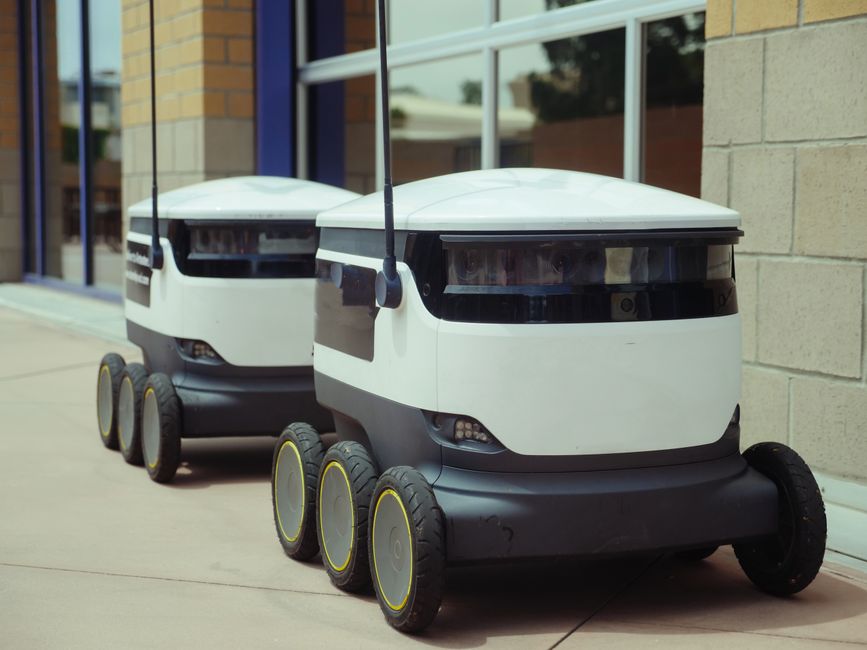
Imagine a world where farms are buzzing not just with bees, but with smart robots working tirelessly alongside farmers. A future where technology helps us grow more food, more sustainably, and with less effort. This isn't science fiction anymore; it's the exciting reality of agricultural robotics and farm automation, a revolution that's reshaping how we feed our growing planet, especially in a country like India, where agriculture is the backbone of our economy.
The Urgency: Why Agriculture Needs Automation
India is a land of farmers, and agriculture is crucial for our nation's food security and economy. However, our farmers face many challenges:
- Increasing Population: We need to produce more food than ever before to feed a rapidly growing population.
- Labor Shortages: Many young people are moving to cities, leading to a shortage of skilled labor in rural areas.
- Climate Change: Unpredictable weather patterns, droughts, and floods make farming incredibly tough.
- Resource Scarcity: Water is becoming a precious resource, and we need smarter ways to use it.
- Efficiency and Productivity: Traditional farming methods can be labor-intensive and sometimes less efficient.
This is where robots and automation step in – not to replace farmers, but to empower them with tools that make farming more efficient, sustainable, and profitable.
What Exactly Are Agricultural Robots?
Agricultural robots, often called "agribots" or "farmbots," are autonomous or semi-autonomous machines designed to perform various tasks on a farm. Think of them as specialized helpers equipped with sensors, cameras, AI, and robotic arms, all working together to make farming smarter. From tiny ground robots that inspect individual plants to large autonomous tractors, these machines are transforming every stage of the farming cycle.
"The future of farming isn't about replacing the farmer; it's about empowering them with precision, data, and automation to create a more resilient and abundant food system."
Meet the Farmbots: Types of Agricultural Robots
The world of agribots is diverse, with robots designed for specific tasks:
1. Planting and Seeding Robots
These robots use GPS and precision mapping to plant seeds exactly where they need to be, at the optimal depth and spacing. This reduces seed wastage and ensures each plant has enough space and nutrients to grow, leading to healthier crops and higher yields.
2. Weeding Robots
Weeds compete with crops for water, sunlight, and nutrients. Traditional weeding often involves manual labor or chemical herbicides. Weeding robots use computer vision to identify weeds and then remove them mechanically (with tiny arms or lasers) or apply herbicides precisely to the weed, significantly reducing chemical usage.
Here's a simplified look at how a weeding robot might think:
# Conceptual pseudo-code for a simple weeding robot's decision-making
function operate_weeding_robot():
    while robot_is_in_field:
        # Step 1: "Look" at the ground
        capture_image_from_camera()

        # Step 2: "Think" - analyze what's seen using AI
        analyze_image_for_plants()

        if plant_detected:
            identify_plant_type() # Is it a crop or a weed?

            if plant_is_a_CROP:
                # If it's our valuable crop, leave it alone
                move_forward_slightly()
            else if plant_is_a_WEED:
                # If it's a weed, activate the weeding tool
                activate_weeding_tool_at_weed_location()
                log_weed_removed(location) # Record the action
                move_forward_slightly()
            else:
                # If unsure, maybe mark for human review
                log_unknown_plant(location)
                move_forward_slightly()
        else:
            # No plants detected, keep moving and scanning
            move_forward_slightly()

# Start the weeding process
operate_weeding_robot()
3. Harvesting Robots
Harvesting delicate fruits and vegetables like strawberries, tomatoes, or apples is a labor-intensive and time-sensitive task. Harvesting robots are equipped with advanced sensors, grippers, and machine learning to identify ripe produce and pick it gently without damage, day or night, ensuring more produce reaches the market fresh.
4. Drone Farming (UAVs)
Drones, or Unmanned Aerial Vehicles (UAVs), are becoming the eyes in the sky for farmers. They can:
- Monitor Crop Health: Fly over vast fields to identify areas needing water, fertilizer, or pest control using multispectral cameras.
- Precision Spraying: Apply pesticides or fertilizers only where needed, reducing chemical use and environmental impact.
- Irrigation Management: Map out soil moisture levels to optimize water usage.
5. Livestock Management Robots
Robots aren't just for crops! In dairy farms, robots can milk cows automatically, feed livestock, and even monitor animal health and behavior, ensuring happier, healthier animals and more efficient farm operations.
The Brains Behind the Bots: AI, Sensors, and Data
What makes these robots so smart? It's a combination of:
- Sensors: Cameras (RGB, multispectral, thermal), LiDAR (for 3D mapping), GPS, soil sensors, and weather sensors give robots "eyes" and "ears" to understand their environment.
- Artificial Intelligence (AI) and Machine Learning (ML): These are the "brains" that allow robots to process sensor data, identify plants, detect diseases, make decisions, and learn from experience.
- Data Analytics: Robots collect huge amounts of data. Analyzing this data helps farmers make informed decisions about irrigation, fertilization, and pest control – a concept known as "precision agriculture."
The Promise for India: A Greener, Richer Future
For a country like India, agricultural robots offer immense potential:
- Increased Yields: Precision farming can lead to higher crop production from the same land.
- Reduced Costs: Less water, fewer pesticides, and optimized labor can save farmers money.
- Sustainable Practices: Targeted application of resources means less waste and a healthier environment.
- Improved Farmer Livelihoods: Higher yields and lower costs translate to better income for farmers.
- Attracting Youth: Modern, tech-driven farming can make agriculture an exciting and viable career path for young Indians.
- Food Security: By increasing efficiency and production, we can better feed our vast population.
Challenges and the Road Ahead
While the future is bright, there are challenges to overcome:
- Cost: Agricultural robots can be expensive, making them inaccessible for many small and marginal farmers.
- Infrastructure: Reliable internet connectivity and charging infrastructure are crucial for autonomous robots, especially in remote areas.
- Training: Farmers need training and support to adopt and operate these new technologies effectively.
- Maintenance: Access to maintenance and repair services for complex robotic systems is essential.
However, with government initiatives, research and development, and the innovative spirit of young minds, these challenges can be addressed. The future might see smaller, more affordable robots, community-shared robotic services, and simpler, user-friendly interfaces.
Conclusion: Cultivating Innovation for Tomorrow's Harvest
Agricultural robots are not just fascinating pieces of technology; they are a vital part of building a sustainable and food-secure future. They represent a powerful blend of engineering, computer science, and agricultural knowledge, offering solutions to some of the biggest challenges our world faces.
For students and enthusiasts in India, this field is brimming with opportunities. Whether you're interested in building robots, programming AI, designing sensors, or even becoming a tech-savvy farmer, agricultural robotics offers a chance to make a real difference. At MakerWorks, we believe in empowering you to be part of this revolution. Start exploring, start building, and help us cultivate a better tomorrow!
What do you think? How do you see robots changing farming in your region? Share your thoughts in the comments below!