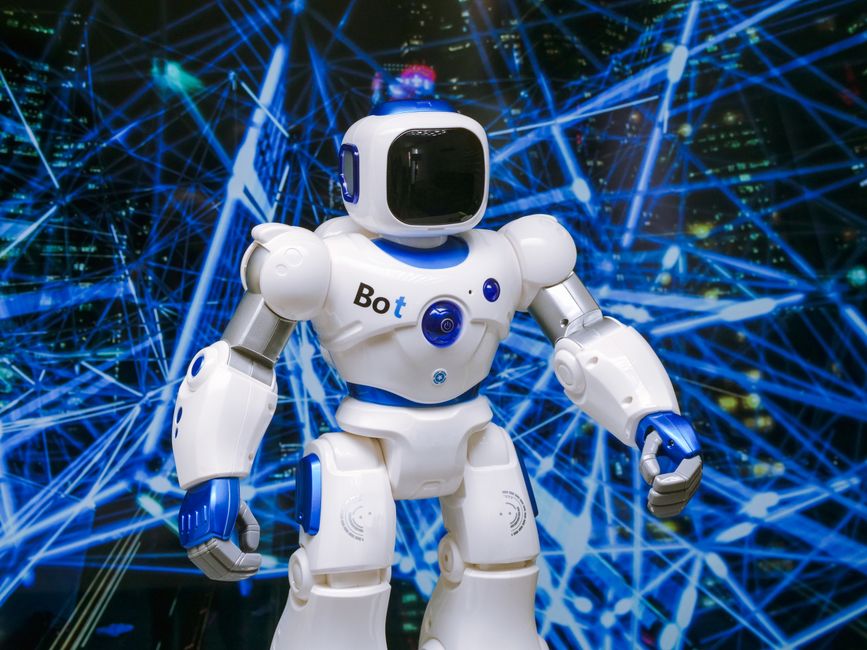
Imagine robots that don't just follow instructions, but actually *think*, learn, and adapt to the world around them. This isn't science fiction anymore! Artificial Intelligence (AI) is rapidly transforming robotics, moving us from clunky, pre-programmed machines to intelligent companions and powerful problem-solvers. For young innovators and budding engineers in India, understanding AI in robotics isn't just about knowing the future – it's about building it. Join us as we explore how AI is making robots smarter, more capable, and ready to revolutionize every aspect of our lives.
What is AI in Robotics?
At its core, Artificial Intelligence is about enabling machines to simulate human-like intelligence. When we talk about AI in robotics, we're talking about giving robots the ability to perceive their environment, process information, make decisions, and learn from their experiences, much like humans do. This goes far beyond simply automating tasks; it's about creating robots that can operate autonomously in complex, unpredictable environments.
Beyond Pre-programmed Movements
Think about a traditional factory robot from a few decades ago. It was incredibly precise, but it could only perform the exact movements it was programmed for. If an object was slightly out of place, or if a new task needed to be done, it would stop or fail. AI changes this entirely. An AI-powered robot isn't just following a script; it's understanding its surroundings, making real-time adjustments, and even learning new skills without being explicitly programmed for every single scenario. This adaptability is the superpower AI brings to robotics.
Key AI Technologies Powering Smart Robots
Several branches of AI work together to give robots their "brains." Here are some of the most important ones:
Machine Learning (ML)
Machine Learning is perhaps the most crucial aspect of AI in robotics. It allows robots to learn from data without being explicitly programmed. Instead of a human writing every rule, the robot observes patterns in data, makes predictions, and improves its performance over time. There are different types:
- Supervised Learning: The robot learns from labelled examples (e.g., "this is a cup," "this is a book"). It's like a student learning from a teacher with correct answers.
- Unsupervised Learning: The robot finds patterns and structures in unlabelled data on its own (e.g., grouping similar objects together).
- Reinforcement Learning: This is like training a pet with rewards and penalties. The robot performs an action, gets feedback (a "reward" for good actions, a "penalty" for bad ones), and learns to maximize its rewards over many trials. This is how many advanced robots learn to navigate or manipulate objects.
Neural Networks and Deep Learning
Inspired by the human brain, neural networks are a type of machine learning algorithm particularly good at recognizing complex patterns. Deep Learning uses neural networks with many "layers" (hence "deep") to process vast amounts of data, enabling breakthroughs in areas like image recognition and natural language understanding. For robots, deep learning means they can better interpret what they "see" and "hear."
Computer Vision
This technology allows robots to "see" and interpret their environment using cameras and other sensors. Computer vision systems can identify objects, recognize faces, track movement, and even understand depth. This is vital for navigation, grasping objects, and interacting safely with humans.
Natural Language Processing (NLP)
NLP enables robots to understand, interpret, and generate human language. This is how voice assistants work, and it's how future robots will be able to have more natural conversations with us, understand spoken commands, and even read instructions from a manual.
How AI Transforms Robotics
The integration of AI fundamentally changes what robots can do:
Enhanced Autonomy and Decision-Making
AI allows robots to operate independently for longer periods, making complex decisions on their own. Instead of just following a pre-set path, an AI robot can dynamically adjust its route based on obstacles, traffic, or new information.
Adaptability and Learning
Robots can now adapt to changing environments and learn new tasks. A manufacturing robot, for example, can learn to handle slight variations in product size or material without needing a complete re-programming.
Human-Robot Collaboration
AI makes robots safer and more intuitive to work alongside. They can predict human movements, understand intentions, and adjust their actions to collaborate effectively, opening doors for shared workspaces in factories and even homes.
Problem Solving in Complex Environments
From exploring Mars to navigating disaster zones, AI empowers robots to tackle challenges in unstructured and unpredictable settings, identifying solutions that would be impossible for a pre-programmed machine.
"The true magic of AI in robotics isn't just automation; it's the ability to infuse machines with curiosity and the capacity to learn, making them partners in discovery rather than mere tools."
Applications of AI in Robotics
The impact of AI-powered robots is already being felt across various sectors:
- Manufacturing: Smart factory robots that can inspect products for defects, assemble complex components, and optimize production lines autonomously.
- Healthcare: Surgical robots assisting doctors with extreme precision, companion robots providing care for the elderly, and diagnostic robots analyzing medical images.
- Agriculture: AI-driven drones and ground robots that monitor crop health, detect diseases, and perform precision planting and harvesting, boosting efficiency for Indian farmers.
- Logistics and Warehousing: Autonomous mobile robots (AMRs) that sort, transport, and manage inventory in vast warehouses, speeding up delivery.
- Space Exploration: Rovers like Perseverance on Mars use AI to navigate treacherous terrain, identify interesting rock samples, and conduct scientific experiments with minimal human intervention.
- Service Robots: From robotic vacuum cleaners that map your home to delivery robots navigating city streets, AI makes these services seamless and efficient.
A Glimpse into the Code: How Robots Learn
While real AI algorithms are incredibly complex, we can understand the basic idea of how a robot makes decisions and learns. Imagine a robot trying to avoid obstacles:
# Imagine a simple robot with distance sensors
distance_front = 15 # centimeters
distance_left = 30
distance_right = 30

# A simple rule-based decision (traditional programming)
# We, the programmers, tell the robot exactly what to do
if distance_front < 20:
    print("Obstacle detected in front! Turning right.")
    # robot.turn_right()
elif distance_left < 10:
    print("Obstacle detected on left! Turning right.")
    # robot.turn_right()
else:
    print("Path clear. Moving forward.")
    # robot.move_forward()

# How AI makes it smarter:
# Instead of us writing these 'if-else' rules for every single scenario,
# an AI robot, through Machine Learning, would *learn*
# the best action (turn left, turn right, move forward)
# based on thousands of sensor readings and past experiences.
# It would build its own complex 'if-else' logic (or a neural network model)
# without explicit programming for every scenario.
# The robot learns from trials and errors, figuring out that
# "when distance_front is 15cm and distance_left is 30cm, turning right leads to success."
In this example, a traditional robot follows fixed rules. An AI robot, however, would be fed tons of data (sensor readings + successful/unsuccessful outcomes) and would then automatically figure out the optimal "rules" or patterns itself. This ability to learn from experience is what makes AI so powerful.
Challenges and the Future
While exciting, the journey of AI in robotics also presents challenges:
- Ethical Considerations: Questions about job displacement, robot accountability, and the potential for bias in AI algorithms need careful thought.
- Complexity and Data: Developing sophisticated AI requires vast amounts of data and significant computational power, which can be resource-intensive.
- Safety and Reliability: Ensuring that AI-powered robots operate safely and reliably, especially in human-centric environments, is paramount.
- Human-AI Collaboration: Designing robots that seamlessly integrate into human workflows and teams requires careful consideration of user experience.
The future of AI in robotics is incredibly bright. We can expect more integrated, autonomous, and intuitive robots that will not only assist us but also collaborate with us, learn from us, and help us solve some of the world's most pressing problems, from environmental conservation to healthcare delivery. For India, this means a massive opportunity for innovation, job creation, and leading the charge in developing intelligent technologies.
Conclusion
AI is no longer just a buzzword; it's the intelligence that powers the next generation of robots. From learning to navigate a cluttered room to performing delicate surgery, AI is making robots smarter, more capable, and truly revolutionary. For students and enthusiasts at MakerWorks, understanding AI is your gateway to shaping this incredible future. The fusion of AI and robotics is not just about building machines; it's about building a smarter, more efficient, and more exciting world.
Ready to dive into the world of AI and Robotics? Explore MakerWorks' courses and workshops designed to equip you with the skills to design, program, and innovate with intelligent robots. Join our community and start your journey to becoming a pioneer in this thrilling field!