Ajay Ummadi › Book › Getting Started with Micro:bit
Book · 2025
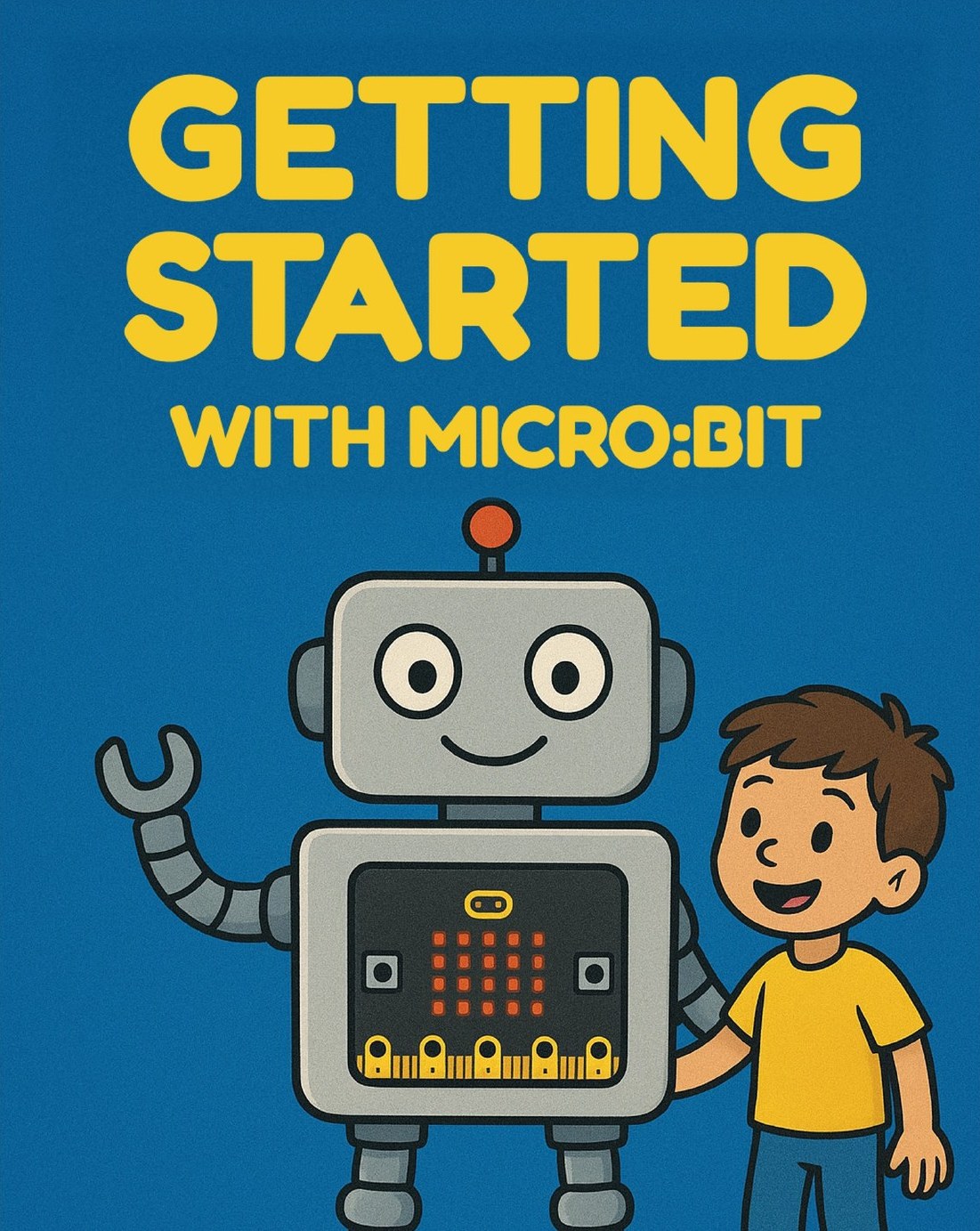
Getting Started with Micro:bit
A Beginner's Guide to Coding, Electronics, and Fun Projects. Written by me and published by Maker Works Lab, Mumbai.
About
What you will learn
Block coding and Python
Program the micro:bit in MakeCode blocks and in Python, step by step, with no prior experience assumed.
Built-in features
Use the buttons, the LED display and the sensors, then wire up external parts on pins P0, P1 and P2.
Add-on components
Connect buzzers, DC motors, servos and an ultrasonic sensor to make your projects move, beep and sense.
Fun projects
Build a mood indicator, a temperature warning system, a reaction-timer game and, finally, your first robot.
Radio and data
Send messages between micro:bits with radio, and log real-world data to analyse.
For students and teachers
Written for students, hobbyists and educators, with lessons and classroom projects ready to use.
Inside the book
Twenty chapters in three parts
Part 1 · Getting started
- Introduction to the Micro:bit
- Setting Up the Micro:bit
- Exploring the Micro:bit Board
- On Start, Forever, and Your First Program
- Using Buttons A and B
- LED Display Patterns and Animations
- Variables and Math
- Using External Pins (P0, P1, P2)
- Using If Conditions and Logic
- Loops and Repetition
Part 2 · Expanding projects
- Ultrasonic Sensor
- Using the Ultrasonic Sensor (Extension)
- Sound and Buzzers
- Motors and Movement: DC Motors
- Controlling a Servo Motor
Part 3 · Advanced projects
- Light, Temperature, and Sound Sensors
- Making a Reaction Timer Game
- Wireless Communication (Radio)
- Creating Your First Robot
- Logging Data with the micro:bit
Plus a glossary of terms.
FAQ
Questions
What is this book about?
Getting Started with Micro:bit is a beginner's guide to coding, electronics and fun projects using the micro:bit, written by Ajay Ummadi of Maker Works Lab.
Who is it for?
Beginners who want to start coding and building with electronics. It comes from Maker Works Lab's work teaching hands-on STEM and robotics in Mumbai.
Where can I read it?
Online as a flipbook on AnyFlip: https://online.anyflip.com/aogwo/mjyr/index.html
How is the book organised?
It has 87 pages and 20 chapters in three parts: Getting Started (chapters 1 to 10), Expanding Projects (11 to 15) and Advanced Projects (16 to 20), ending with a glossary of terms.
When was it published?
2025, first edition, by Maker Works Lab, Mumbai, India.